I feel like I’ve been in a funk lately. I got out of my routine and am struggling. Plus, we’re getting to the end of the school year. I’m ready to be done, and my students are ready to be done. It’s difficult to get through the days. The weather is getting warmer, I don’t want to go into work, and I’m just trying to make it through the school year.
However, I’m still focused on my goals and dreams. So as such, I’m working on a way to be able to take steps so that I can reach my goals. I came across a video on Facebook that someone had made of a skill tree for a craft they were working on and wanting to improve; this video really inspired me to do something like that for myself.
So if you are unfamiliar with the concept, a skill tree is a tool often used in video games that help the characters develop. As you gain more experience, you can choose to become better in certain skills, like combat training, defense, magic, etc. The skills may branch off into different aspects. Some are special and relate to each other, and others are relatively independent. Skill trees can be as complicated or as detailed as you want them to be. I’ve included an example template below to give you an idea. In this template, you work from the single point at the top and progress farther down. You can work on any number of skills at any time.
This was my base idea, and it looked really good. I also included a reward space for myself once I felt that I accomplished a skill. This way, I would be able to motivate myself to keep going. I need to reward myself or I won’t want to continue to make progress.
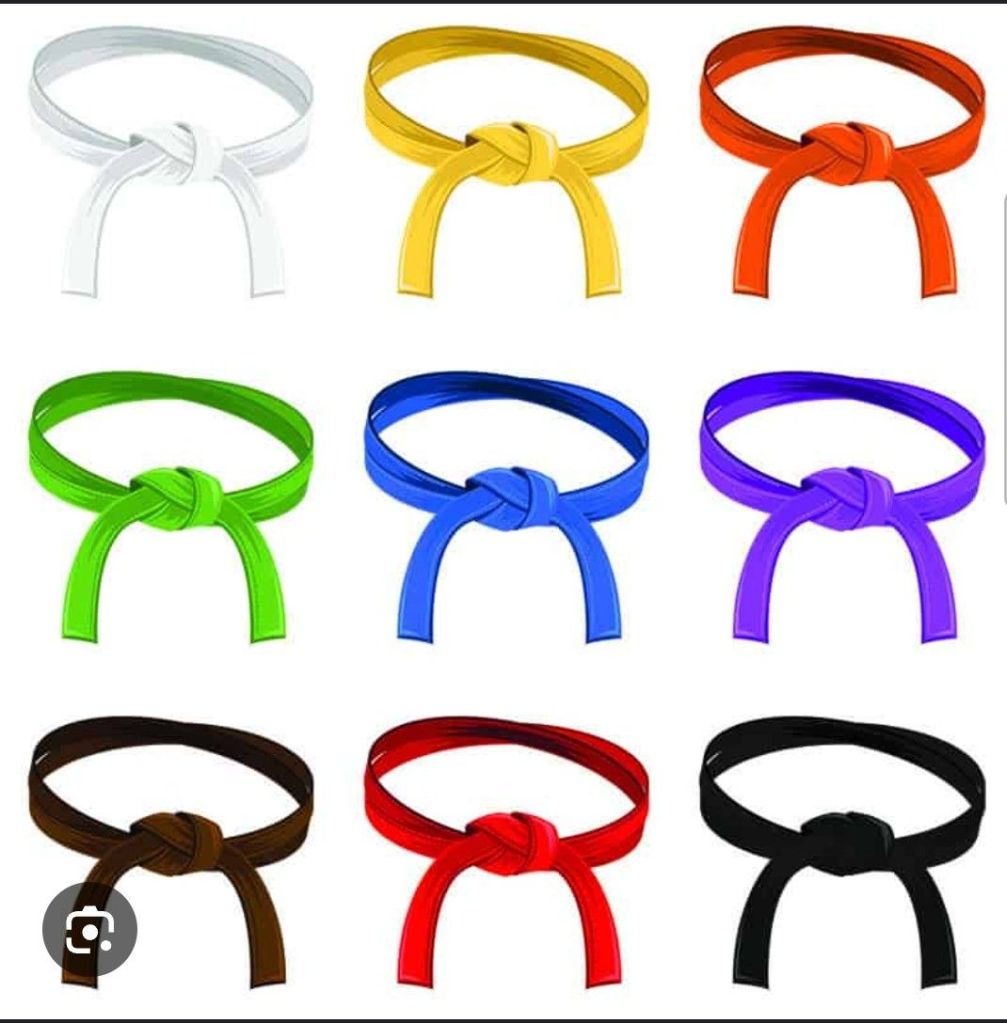
However, as I continued to think about this idea, I realized I already had a better system that could serve as a reference. As a martial artist, my skill tree can also be a belt system. So I pivoted course from the skill tree, and turned it into a belt system. I gave myself 10 steps as a guideline, but what’s cool is this is customizable for anyone and any purpose.
I created a worksheet for myself and for anyone else that needs or wants to use this system. If you’re interested in the paper version, reach out to me, and I’ll make sure you get a copy of it! But I also want to pose the same questions here on my blog that are in the worksheet in case you are interested in doing this for yourself. I’ll also pair it up with an actual example I did (yes, I’ve already used this for myself) so that you can see the thought process behind it.
Questions and Steps
- What general area do you want to build up?
- What is the ultimate goal that you want to accomplish?
- How can you reach that ultimate goal? (multiple answers possible and encouraged)
- What are the steps to take? (take the ways you can reach that ultimate goal and break them down into steps that are manageable for you)
- How will you know that you have accomplished these steps?
- What are the easiest steps you can take? (You can do them right now)
- What are the medium steps you can take? (May seem a little difficult but not impossible)
- What are the hardest steps you can take on your list? (May seem impossible now but you’re still willing to try)
- The last part is to rank them from easiest to hardest, and voila! You have a belt/skill tree system for whatever you want to improve.
Abstract things are fine, but I’m a practical person. Let me do the same thing with an example I made for myself.
- What general area do you want to build up? Health
- What is the ultimate goal that you want to accomplish? Lose 25 pounds
- How can you reach that ultimate goal? Eat healthy, exercise consistently, drink water, sleep well, manage stress
- What are the steps to take? Eat 1 serving of fruit per day, eat 1 serving of vegetables per day, create healthy breakfasts and lunches, drink more than 30 oz of water per day, drink more than 60 oz of water per day, get into the gym at least one day a week, go to taekwondo class one day a week, do home workout in bullet journal daily, create a workout routine, meditate once a week
- How will you know that you have accomplished these steps? Tracking food and water accurately, creating a meal and exercise plan, logging meditation in the Insoght Timer app
- What are the easiest steps you can take? Fruits, vegetables, 30 oz of water
- What are the medium steps you can take? Meditate once a week, create meal plans, create workout routines, taekwondo once a week
- What are the hardest steps you can take on your list? 60 oz of water, gym, daily bullet journal workout
- Rank:
- White Belt: Eat 1 serving of fruit each day
- Yellow Belt: Drink more than 30 oz of water each day
- Orange Belt: Eat 1 serving of vegetables each day
- Green Belt: Meditate once a week
- Camo Belt: Create a healthy meal plan
- Blue Belt: Create a consistent workout routine
- Purple Belt: Do taekwondo one day a week
- Brown Belt: Get to the gym one day a week
- Red Belt: Do home workout in bullet journal
- Black Belt: Drink more than 60 oz of water each day
In this example, drinking enough water is the hardest thing for me to remember and do. So I made it my highest belt. I usually take fruit for lunch at work, so that one felt the easiest for me. The rest just kind of fall into place based on difficulty.
I currently have nine different belt systems I’ve created for myself. The really cool thing is that you can be a white belt in one thing and a black belt in another. They’re relatively independent of each other, which helps me in my terms of motivation. Each one also has its own independent reward for once I get to the black belt level.
I’m excited for this and am hopeful it’ll help me be more motivated and actively working towards my goals. Likewise, I hope this helps you in whatever you’re trying to do and accomplish. Again, if you want a paper copy of this worksheet, reach out and I’ll get it to you!
 Battle Kim of the Republic
Pingback: Conscious Effort | Battle Kim of the Republic